



Blog
Thick Poha vs Thin Poha: What’s the Difference and Which Should You Use?

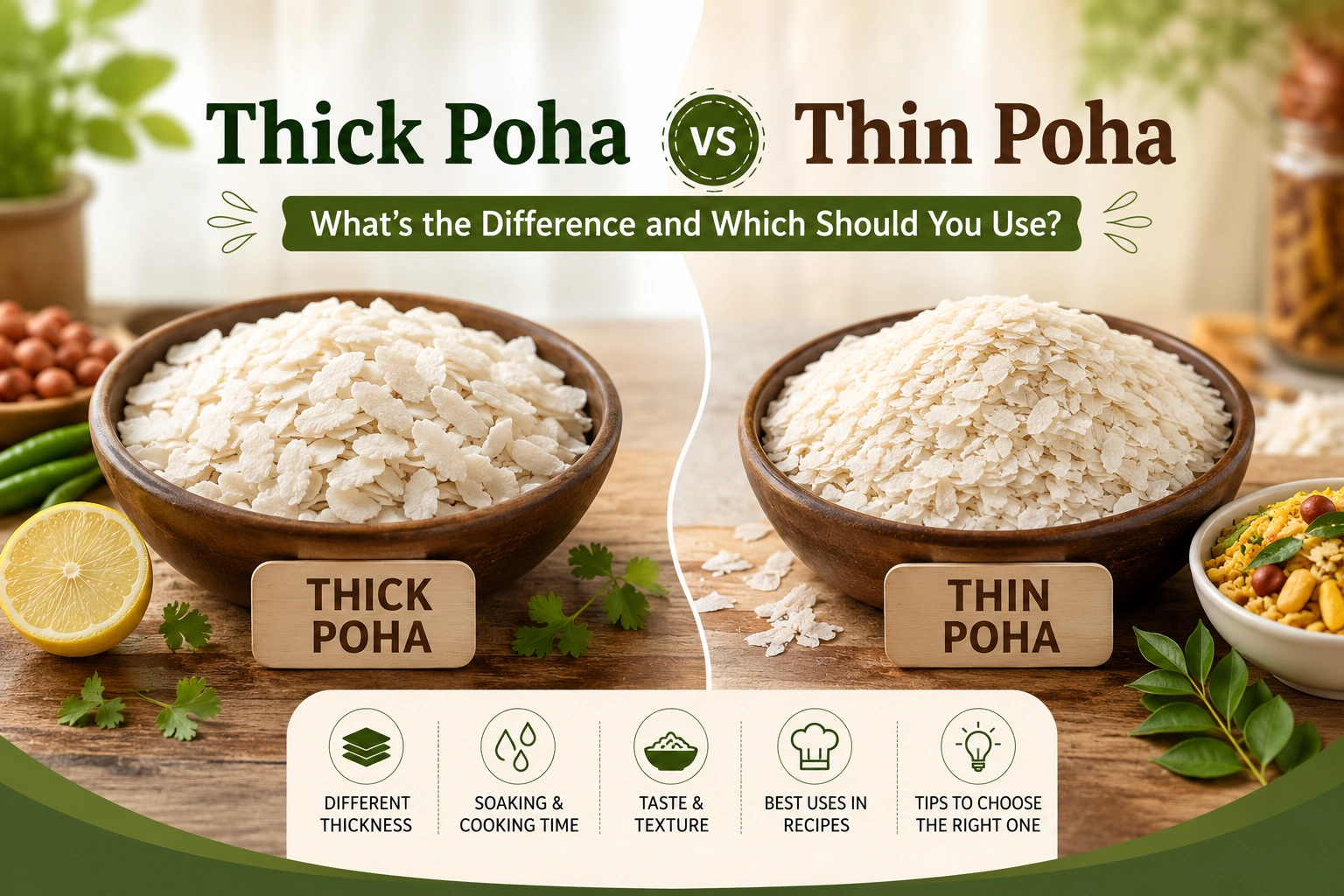
Stand in front of the poha section at any Indian grocery store and you’ll probably pause for a second. Thick or thin? Does it even matter which one you grab? If you’ve ever ended up with a soggy, mushy poha when you were hoping for something light and fluffy, chances are the answer is yes and the thick poha vs thin poha question is exactly where things went sideways.
This isn’t just a packaging difference. Thick poha and thin poha behave completely differently in the kitchen, from how long they need to soak to what they taste like once cooked. Get the wrong one for your recipe, and even a perfect technique won’t save the dish.
What Does "Dental Cap" Actually Mean?
Poha is flattened rice parboiled, pressed flat, and dried, which is what gives it that light, papery texture instead of looking like regular grains of rice. It’s been a staple of Indian breakfast tables for generations, valued mostly because it comes together fast and doesn’t ask much of you in the kitchen
You’ll sometimes hear it called rice flakes, especially outside regions where “poha” is the everyday word. Either name points to the same basic idea: rice that’s been processed into thin, flat poha flakes that cook (or soften) almost instantly once they hit water or hot oil.
What Is Thick Poha?
Thick poha, as the name suggests, is pressed less aggressively during processing, leaving the flakes sturdier and noticeably chunkier to the touch. Pick up a handful and you can actually feel the difference compared to the thinner variety it has more body, almost a slight bite to it even before cooking
Because thick poha flakes hold their shape better, they’re the go-to choice for the classic, everyday poha dish most households make the one with onions, mustard seeds, curry leaves, and a squeeze of lemon.
What Is Thin Poha?
Thin poha goes through a heavier pressing process, which leaves it delicate, almost translucent in some brands, and much quicker to soften. It doesn’t take much liquid at all before it turns tender, which is both its biggest strength and its biggest risk if you’re not paying attention.
Thin poha flakes are the ones you’ll usually find in chivda mixtures and other crunchy snack preparations, precisely because they crisp up beautifully when fried or roasted instead of turning soggy.
Thick Poha vs Thin Poha: What's the Difference?
Once you’ve handled both side by side, the thick poha vs thin poha distinction becomes pretty obvious. Here’s what actually separates them.
Difference in Thickness and Texture
This is the most visible difference. Thick poha flakes are noticeably wider and sturdier, while thin poha is delicate and almost see-through in comparison. That single structural difference is what drives everything else about how each one behaves once it hits your kitchen.
Difference in Soaking and Cooking
Thick poha needs a proper soak, usually a few minutes under running water or a soak-and-drain approach, before it’s ready to cook. Rush this step and you’ll end up with hard, undercooked bits scattered through your dish. Thin poha, on the other hand, softens almost instantly sometimes a quick rinse is genuinely all it needs, and oversoaking turns it into mush fast.
Difference in Taste and Mouthfeel
Neither type tastes dramatically different on its own poha is fairly neutral and takes on whatever spices and ingredients you cook it with. But texture changes everything about how it feels to eat. Well-prepared thick poha stays satisfyingly chewy with a bit of resistance, while thin poha turns soft and almost pillowy, or crispy poha if it’s been fried rather than soaked.
Difference in Best Uses
Thick poha generally suits dishes where you want each flake to stay distinct and hold its shape through cooking. Thin poha shines in preparations where softness or crunch matters more than structure think snacks, quick binding agents, or lighter preparations.
Which Poha Is Better for Different Recipes?
There’s no universally “better” option here it really comes down to what you’re making.
Best Uses for Thick Poha
This is your go-to for classic Maharashtrian poha and similar everyday poha dishes across India, where you want fluffy, distinct grains rather than a mushy pile. It also works well in poha-based cutlets or dishes where the flakes need to hold together and retain a bit of texture after cooking.
Best Uses for Thin Poha
Thin poha earns its keep in crunchy snack mixes, chivda, and certain sweet preparations where a light, crisp bite is exactly what you’re after. Some regional styles, including versions of Gujarati poha, actually favour a finer flake for a softer end result, so it’s worth knowing your recipe before picking a bag off the shelf.
Can You Substitute Thick Poha for Thin Poha?
Technically, yes, but the results won’t be identical. Swap thin for thick in a recipe built around soft poha and you’ll likely end up with something chewier and less delicate than intended. Go the other way using thin poha where thick was called for and you risk a mushy, overly soft dish that loses its structure entirely.
Poha is a genuinely versatile ingredient, but that versatility still has limits. If a recipe specifically calls for one type, it’s usually for a good reason rooted in how that dish is meant to feel
Tips for Choosing the Right Poha
A few things are worth checking before you buy: look for flakes that are uniform in size, free of excess dust or broken bits, and properly dried rather than damp or clumped together. Good-quality poha should feel light, not sticky, when you run it through your fingers.
Brands like Patlani Foods focus on consistent flake quality across both thick and thin varieties, which honestly makes a bigger difference than people expect inconsistent poha in the same batch can cook unevenly, leaving some flakes mushy and others still firm. For everyday cooking, that consistency is what saves you from guesswork every single time you open a new pack.
How to Store Poha Properly
Poha doesn’t need anything elaborate, just an airtight container kept away from moisture and direct sunlight. Humidity is really its main enemy damp poha clumps together and can turn stale faster than you’d expect from something so simple.
If you’re using poha regularly as a quick meal option, buying it in amounts you’ll actually finish within a reasonable stretch helps keep the flakes fresh and ready whenever a craving or a rushed morning calls for it.
Frequently Asked Questions
1. What is the difference between thick poha and thin poha?
Thick poha flakes are sturdier and hold their shape well during cooking, while thin poha is delicate, softens quickly, and works better in snacks or lighter dishes.
2. Which poha is better for making traditional poha?
Thick poha is generally preferred for the classic onion-and-spice poha dish, since it stays fluffy and distinct rather than turning mushy.
3. Can thin poha be used for snacks?
Yes, thin poha is actually ideal for crunchy snacks like chivda, since it crisps up nicely when fried or roasted.
4. Does thick poha require more soaking?
Yes, thick poha typically needs a proper soak or rinse under running water, while thin poha softens almost instantly with minimal liquid.
5. How should poha be stored to keep it fresh?
Store poha in an airtight container away from moisture and sunlight, and try to use it within a reasonable time to avoid clumping or staleness.
