


Blog
Nylon Poha vs Regular Poha: Understanding the Texture Difference

Stand in front of the poha section at any Indian grocery store and you’ll probably pause for a second. Same flattened rice, same pale colour, but two different packets one labelled “thin” or “Nylon,” the other just “poha.” Pick the wrong one for what you’re cooking, and you’ll know it within minutes: either a mushy, sticky mess, or flakes that stay stubbornly hard no matter how long you soak them.
That’s really the whole story behind Nylon Poha vs Regular Poha and its thicker counterpart. It isn’t a marketing gimmick or a quality label it’s about flake thickness, and thickness changes almost everything about how the poha cooks, feels, and holds up in a dish.
What Is Nylon Poha?
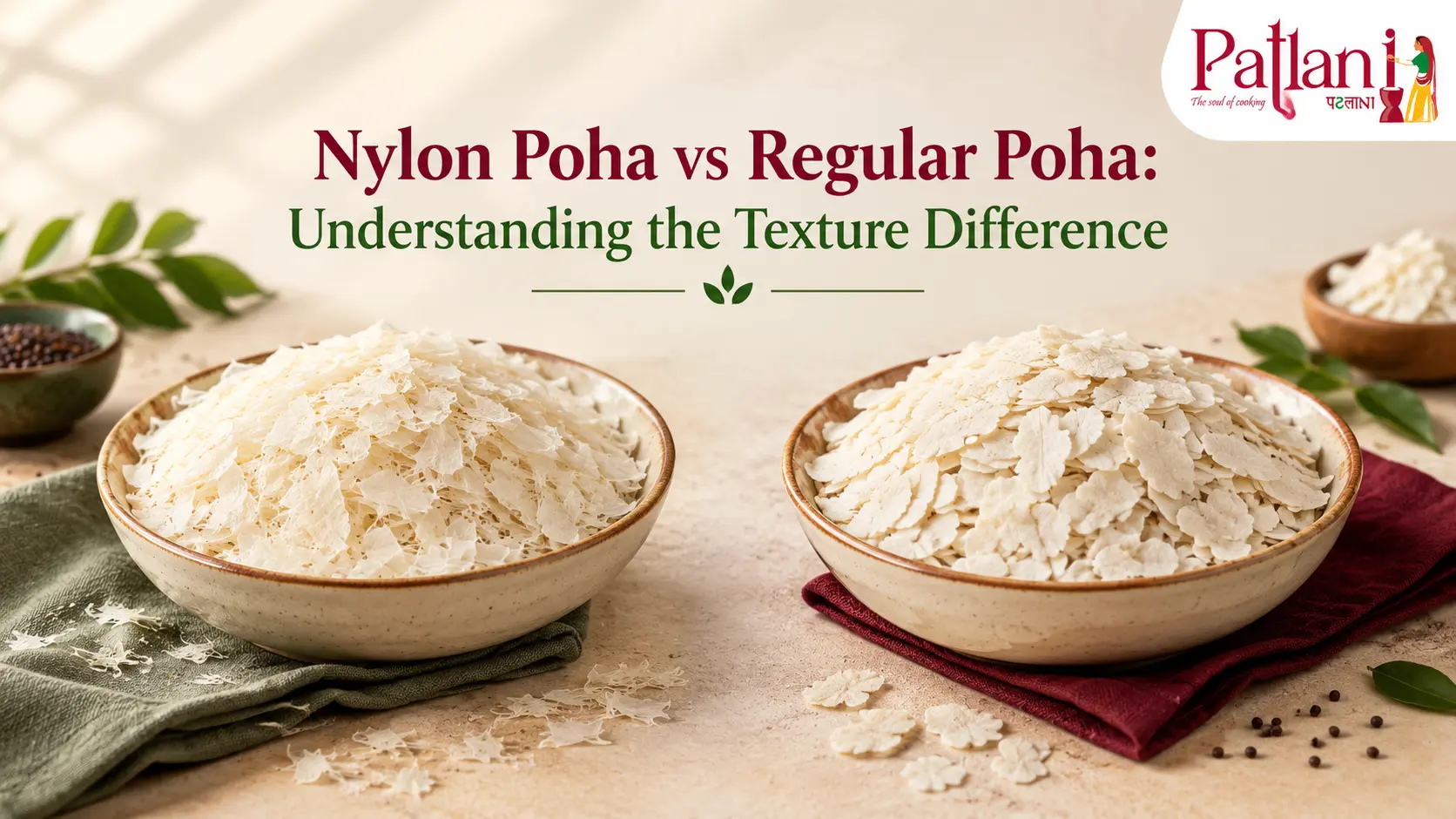
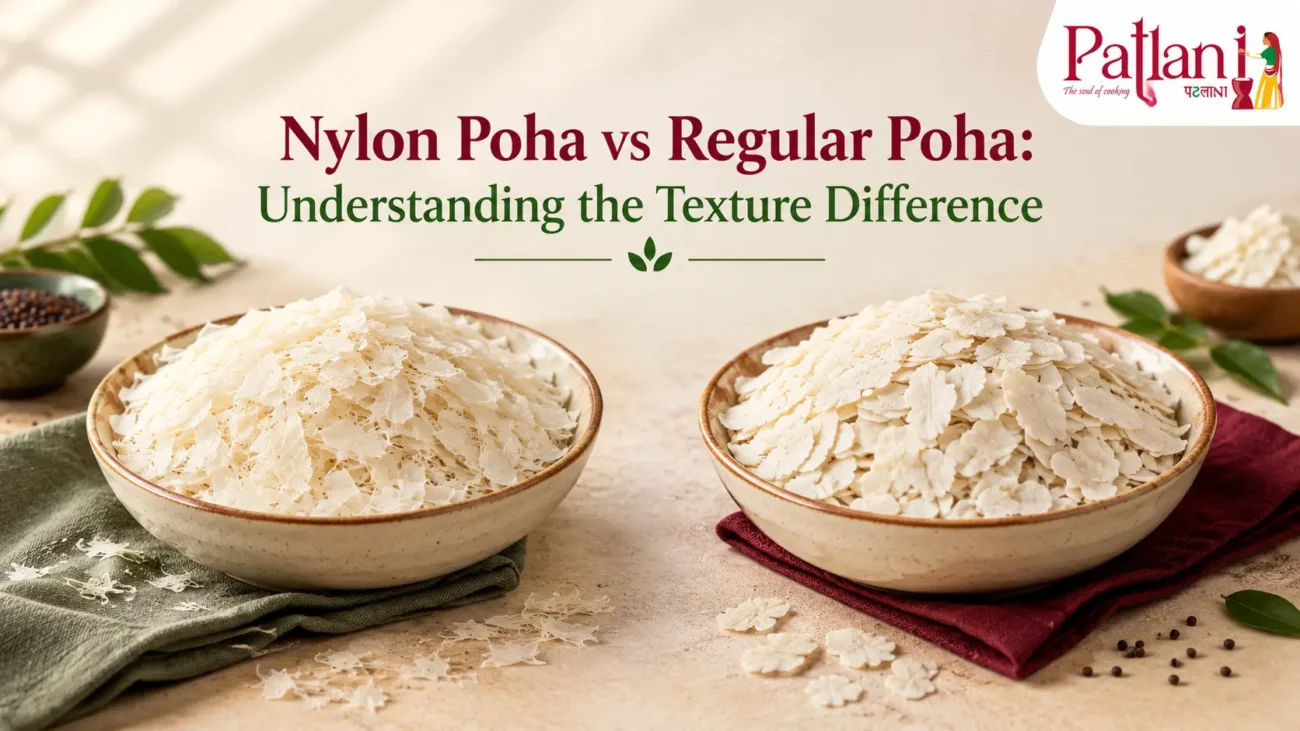
Nylon Poha refers to a very thin, delicate cut of flattened rice. The name has stuck around in Indian markets for years, likely because of how fine and almost translucent the flakes look compared to thicker varieties though there’s no single confirmed origin story for the term, so it’s best treated as a common market name rather than a technical one.
Visually, the flakes are pale, light, and noticeably thinner than standard poha. Pick some up and they feel almost weightless. That thinness is exactly why they behave the way they do in a bowl they soak up water fast, sometimes within seconds, and if you’re not careful, they turn soft before you’ve even finished rinsing them.
Because of this, it tends to work best in preparations where a light, almost melt in the mouth texture is the goal, rather than dishes that need the flakes to hold a firmer shape.
What Is Regular Poha?
“Regular poha” is a bit of a loose term, honestly. Most of the time it means a medium-to-thick flake, but ask five different shopkeepers and you might get five slightly different answers the exact thickness shifts with the brand, the region, sometimes even the batch. There isn’t one fixed industry standard everyone follows.
What generally holds true is that regular poha is sturdier than the thin variety. It takes a little longer to soften when rinsed, and it holds its shape better once cooked. Most households reach for this type when making everyday breakfast poha, since it doesn’t collapse into mush the moment water touches it.
Nylon Poha vs Regular Poha: What Is the Main Difference?
If you’re trying to understand the difference between the two in one sentence, it comes down to this: thickness drives everything else.
Thinner flakes absorb water faster, cook quicker, and end up softer. Thicker flakes take longer to soften, need a bit more water or soaking time, and end up with more bite once they’re done. Neither is “wrong” they’re just suited to different jobs in the kitchen.
|
Feature |
Nylon Poha |
Regular Poha |
|---|---|---|
|
Flake thickness |
Very thin |
Medium to thick |
|
Texture |
Delicate, light |
Firmer, more structured |
|
Water absorption |
Fast |
Slower |
|
Preparation |
Quick rinse, minimal soaking |
Slightly longer soak or rinse |
|
Cooking behaviour |
Softens quickly, can turn mushy if over soaked |
Holds shape well during cooking |
|
Best suited for |
Light snacks, certain chivda styles |
Traditional breakfast poha, kanda poha |
|
Final texture |
Soft, airy |
Firm, separate flakes |
Neither version is universally better it genuinely depends on what you’re cooking and what texture you’re after.
How Does Nylon Poha Texture Differ From Regular Poha?
This is really where most of the confusion comes from, so it’s worth slowing down here.
The texture here is defined by how delicate the flakes are. They’re thin enough that moisture moves through them almost immediately, which is great when you want a soft, light result but risky if you’re not paying attention, because a few extra seconds of soaking can be the difference between “soft” and “soggy.”
Regular poha, being thicker, gives you more room for error. The flakes absorb water more gradually, so there’s a wider window before they start falling apart. This is part of why thicker flakes tend to be more forgiving for someone still learning how much water or soaking time poha actually needs.
Rinsing technique matters for both, but it matters more with the thin variety. A quick rinse under running water, followed by draining rather than soaking, usually works better than letting it sit in water the way you might with a thicker flake.
Which Poha Is Better for Breakfast?
Honestly, this depends more on personal preference than on one type being objectively superior.
Traditional kanda poha the onion, mustard seed, and curry leaf version most households make regularly tends to work well with regular poha, since the dish benefits from flakes that stay separate and slightly firm rather than clumping together. Gujarati-style poha, which often leans sweeter and uses more oil and a touch of sugar, can go either way depending on how soft you like the final texture.
Vegetable poha and peanut poha, where you’re mixing in other ingredients, usually do better with a sturdier flake that won’t disintegrate once vegetables and peanuts are folded in. Lemon poha, served fairly fresh and light, can work nicely with either thickness, though many people find the lighter mouthfeel of thinner flakes suits it well.
Which Poha Is Better for Snacks and Chivda?
When it comes to poha chivda and other dry snack mixes, thickness plays a slightly different role than it does at breakfast.
Thinner flakes roast faster and turn crisp with less oil, which some snack makers prefer for a lighter, airier chivda. Thicker flakes take a bit more time and oil to crisp up properly, but the result tends to hold its crunch longer once stored, which matters for namkeen that’s meant to sit in a jar for weeks.
Neither is strictly “correct” for chivda a lot comes down to the specific recipe and how crispy you want the final mix to be.
How to Prepare the Thin Variety Without Making It Too Soft
A few practical habits go a long way here. Rinse it gently under running water rather than letting it sit soaking in a bowl a few seconds is usually plenty. Drain it thoroughly afterward and give the excess water time to run off before you start cooking. From there:
- Add any extra moisture gradually rather than all at once
- Don’t leave it sitting in the strainer too long, since residual dampness keeps softening the flakes on its own
- Handle it gently while mixing delicate flakes break more easily than thicker ones do
How to Prepare Regular Poha for the Right Texture
Regular poha is more forgiving, but a few basics still help. Rinse it until the water runs mostly clear, then drain well and let it rest for a few minutes so the flakes soften evenly instead of unevenly. If it still feels dry once you start cooking, add water a little at a time rather than dumping it in. And two things worth avoiding: over-handling, which can turn even sturdy flakes mushy, and leaving it on the heat too long, which dries it out or turns it pasty depending on how much moisture is left.
Which One Should You Choose?
There’s no wrong answer here, but a few things can help you decide.
Go with the thinner flakes if you like a light, delicate texture, or if the dish you’re making a soft snack mix, say, or something meant to almost melt together actually calls for that. It also saves time, since there’s barely any soaking involved.
Regular poha makes more sense if you want the flakes to hold their shape once cooked, or if you’re doing a traditional breakfast preparation where a bit of bite and structure matters. It’s also the safer pick when vegetables, peanuts, or other add-ins need something sturdy to mix into.
A Quick Note on Nutrition
Both Nylon Poha and regular poha are simply different thicknesses of the same base ingredient flattened rice. Any nutritional differences between them come down more to the specific brand, processing method, portion size, and how the poha is prepared, rather than the word “Nylon” itself. If nutrition is a priority, it’s worth checking the packaging of the specific product you’re buying rather than assuming one type is automatically healthier than the other.
Brands like Patlani Foods, which work with rice-based and traditional Indian snack ingredients, are a reasonable example of how quality poha and namkeen products are made available to households that want convenience without giving up on familiar regional flavours. That said, no single brand or flake type should be treated as a universal “healthiest” option it really depends on what’s in the specific pack you pick up.
