



Blog
Besan Flour: 10 Indian Recipes You Can Make at Home

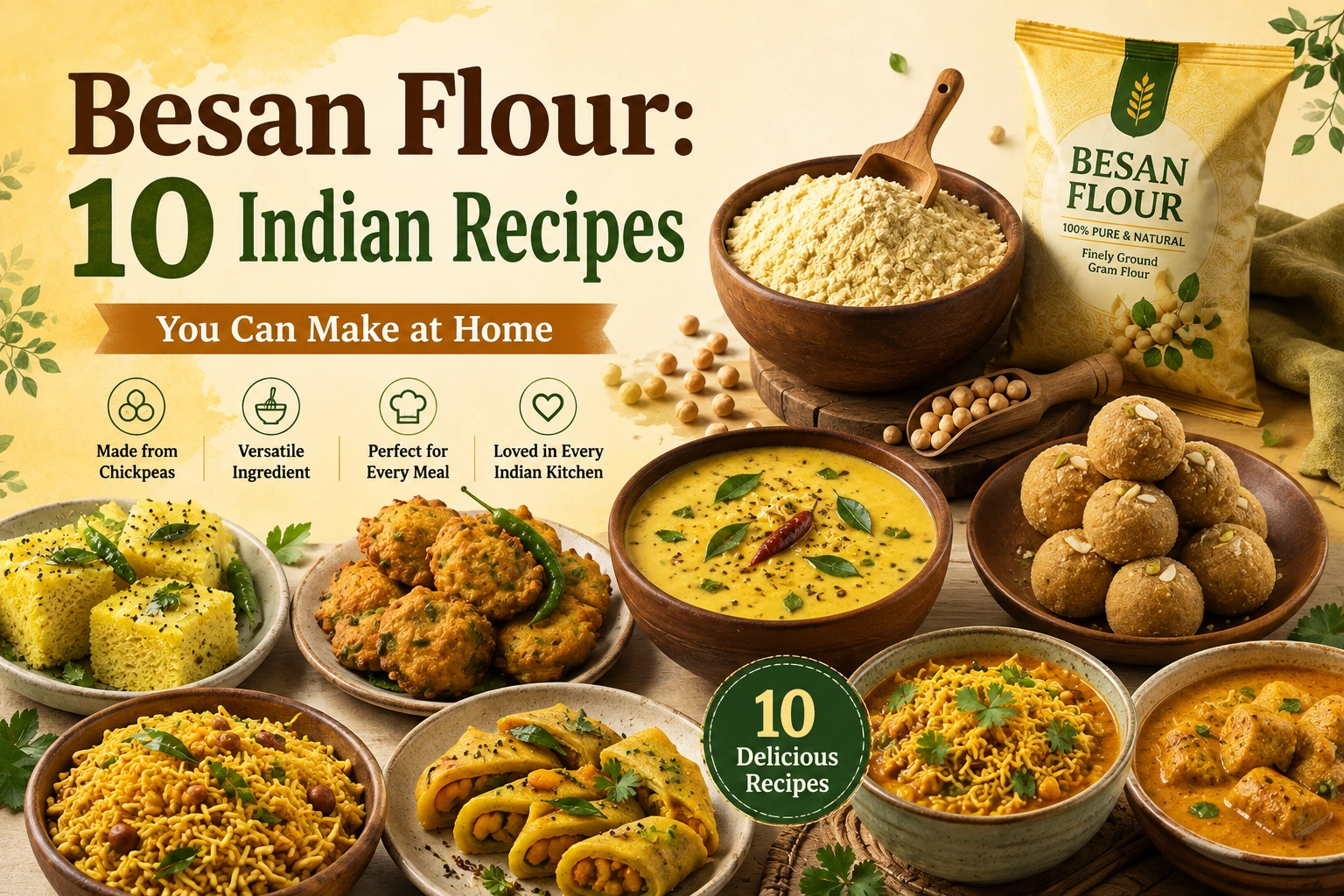
Open almost any Indian kitchen’s pantry and you’ll find a bag of besan flour tucked somewhere close to the front not buried at the back like the ingredients that only come out once a year. There’s a reason for that. Few ingredients pull double duty quite like besan flour does, moving effortlessly between breakfast, snacks, main dishes, and even dessert without missing a beat.
If you’ve only ever used it for one or two things, this is your excuse to branch out. Below are ten genuinely different ways to put besan flour to work, from quick weekday breakfasts to dishes you’d happily serve guests.
What Is Besan Flour?
Besan flour is made by grinding dried chickpeas specifically the small brown variety called chana dal into a fine, pale yellow powder. In English, you’ll often see it called gram flour or chickpea flour, and all three names point to the exact same pantry staple.
What sets it apart from regular wheat flour is its slightly nutty flavour and how well it binds and thickens when mixed with water or other ingredients. That combination is exactly why besan flour shows up in so many corners of Indian cooking, sweet and savoury alike.
Why Is Besan So Popular in Indian Cooking?
Walk into almost any Indian kitchen and besan earns its shelf space through sheer versatility. It fries up beautifully for crispy fritters, steams into soft, spongy snacks, thickens curries without clumping the way some flours do, and even holds sweets together when mixed with ghee and sugar.
It’s also deeply tied to regional cooking traditions. Gujarati recipes lean on it heavily, and it shows up just as often in Rajasthani, Maharashtrian, and Punjabi kitchens under slightly different names and preparations. Few ingredients cross that many regional lines this comfortably.
10 Delicious Indian Recipes You Can Make With Besan Flour
Here’s where besan flour really earns its reputation. These ten besan recipes cover a good spread of breakfast, snacking, and main-course territory, so there’s something here whichever mood you’re cooking for.
1. Besan Chilla
Think of this as India’s answer to a savoury pancake. Whisk besan with water, a bit of chopped onion, green chilli, and a handful of spices, then cook it on a hot tawa until both sides are golden. It’s a genuinely quick Indian breakfast ready in under fifteen minutes and works just as well folded around a simple vegetable filling if you want to dress it up a little.
2. Gujarati Dhokla
Steamed rather than fried, dhokla has a soft, spongy texture that soaks up its tempering of mustard seeds, curry leaves, and a touch of sweetness beautifully. It’s a staple across Gujarati households, usually served as a light breakfast or an afternoon snack alongside a cup of chai. Getting the batter to ferment slightly before steaming is really what gives dhokla its signature airy bite.
3. Besan Kadhi
This one’s a warm, tangy yogurt-based curry thickened with besan, simmered with a tempering of cumin, mustard seeds, and curry leaves. Kadhi is usually paired with steamed rice for a comforting weekday lunch, and the besan is what gives it that smooth, slightly thickened body without needing cream or anything heavier.
4. Besan Pakora
When the monsoon hits or you just want something crunchy with your evening tea, pakoras are the answer. Vegetables like onion, potato, or spinach get dipped in a spiced besan batter and deep-fried until golden and crisp. Among crispy Indian snacks, this one’s hard to beat for how quickly a craving gets satisfied.
5. Besan Ladoo
On the sweeter side of things, besan ladoo is made by roasting besan slowly in ghee until it turns a deep golden colour and smells distinctly nutty, then mixing in sugar and shaping it into round balls. It’s a classic during festivals and celebrations, and honestly, the slow roasting step is where most of the magic actually happens rush it, and the flavour just isn’t the same.
6. Gatte Ki Sabzi
A Rajasthani specialty, this dish involves rolling besan dough into cylindrical logs, boiling them, slicing into pieces, and then simmering everything in a spiced yogurt-based gravy. Gatte ki sabzi has a firm, slightly chewy bite that holds up well against the tangy gravy, and it’s typically served with rice or roti as a filling main course.
7. Besan Cheela Rolls
A fun twist on the classic besan cheela, this version involves cooking thin besan crepes and rolling them up around a spiced potato or paneer filling, then slicing into bite-sized pinwheels. They work well as an appetiser or a lunchbox item that still feels a bit special without much extra effort.
8. Sev
Those thin, crispy strands you often find scattered over chaat or mixed into namkeen blends start life as a simple besan dough, pressed through a mould directly into hot oil. Sev keeps for weeks in an airtight container, making it one of the more practical Indian snacks to have on hand for topping dishes or just snacking straight from the jar.
9. Besan Sev Tameta
A Gujarati comfort dish built around a tomato-based curry, finished off by stirring in a generous handful of sev right before serving. The sev softens slightly in the gravy while still holding a bit of bite, giving the dish a texture you don’t really get anywhere else. It’s usually eaten with rotla or rice, especially during the winter months.
10. Besan-Based Indian Snack Mix
For something a little different, roasted besan can form the base of a spiced, crunchy snack mix combined with peanuts, curry leaves, and a blend of spices, then baked or lightly fried. It’s an easy way to turn plain besan into something you’ll actually reach for during a movie night or unexpected guests.
Tips for Cooking With Besan Flour
A few things make a real difference once you start experimenting. Always sift besan before using it in batters it clumps more than wheat flour does, and sifting saves you from lumpy chillas or pakoras. When roasting it dry for ladoo or similar sweets, keep the heat low and stir constantly, since besan can go from perfectly toasted to burnt surprisingly fast.
For everyday cooking, having good-quality besan on hand genuinely changes the outcome. Coarser or stale besan can leave a slightly bitter aftertaste, especially in dishes like kadhi where the flour’s flavour isn’t masked by much else.
How to Store Besan Flour Properly
Keep besan flour in an airtight container, away from direct sunlight and humidity, and it’ll comfortably stay fresh for months. If your kitchen tends to run warm or humid, refrigeration helps extend its shelf life even further and keeps pests away.
Choosing a well-milled, consistent product also matters more than people expect. Patlani Foods is known for producing besan flour with a fine, even texture, which genuinely makes a difference whether you’re whisking up a quick chilla or slow-roasting it for ladoo consistency in the flour translates directly into consistency in the final dish.
Frequently Asked Questions
1. What is besan flour used for in Indian cooking?
Besan flour is used across a huge range of dishes savoury pancakes, fritters, curries like kadhi, sweets like ladoo, and snacks like sev, making it one of the most versatile ingredients in Indian food.
2. What is the difference between besan and gram flour
There isn’t one besan, gram flour, and chickpea flour all refer to the same product, ground from chana dal, just under different names depending on the region or language.
3. What are some easy besan recipes to make at home?
Besan chilla and besan pakora are among the easiest to start with, since both come together quickly with basic pantry ingredients and require no special equipment.
4. How should besan flour be stored?
? Store it in an airtight container away from moisture and sunlight; refrigerating it in warm or humid climates helps it stay fresh for longer.
5. Can besan flour be used for both sweet and savoury recipes?
Yes, absolutely. It works equally well in savoury dishes like kadhi and pakora as it does in sweets like besan ladoo, which is part of what makes it so widely used.
