



Blog
Ragi Flour: Easy Ways to Add This Millet to Your Everyday Diet

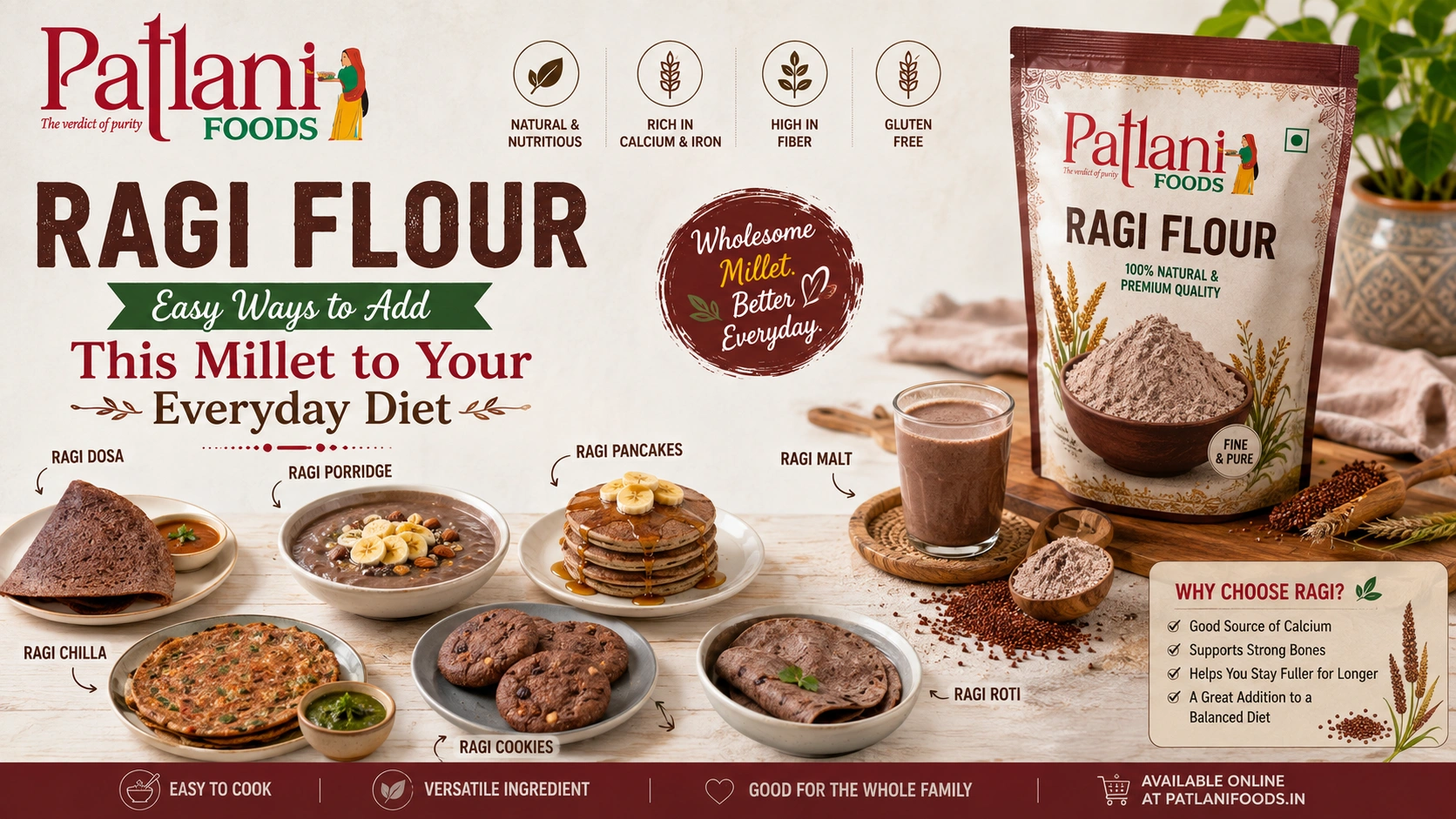
Millets are having a moment right now, and if you’re trying to figure out where to even begin, start with ragi. Chances are it’s already sitting somewhere in your family’s food history a grandmother’s malt drink, a roti that showed up occasionally, a bowl of porridge someone made when you were unwell as a kid. It never really left Indian kitchens; it just took a back seat for a while.
Here’s the part that makes it easy: you don’t have to rebuild your diet around ragi flour. No new routine. No special equipment. Just a few small swaps, made when it’s convenient, and ragi finds its way into meals you’re already cooking. That’s really the whole idea behind this piece practical ways to bring this millet into your week without turning your kitchen upside down.
At PatlaniFoods, that’s the approach we try to take with food in general useful ingredients should slot into real life, not demand a separate project. So let’s get into what ragi flour actually is, why it stuck around for so long, and the everyday ways you can start cooking with it.
What Is Ragi Flour, Exactly?
Ragi flour comes from grinding whole ragi grains you’ll also hear it called finger millet flour into a fine, reddish-brown powder. The colour is distinctive enough that you’ll recognise it in a shop from a few feet away. It has an earthy, slightly nutty taste, nothing overpowering, and it blends easily with water, milk, or other flours depending on what you’re making.
Since it’s a whole grain flour, ragi atta keeps the bran and germ intact rather than stripping them out, which is a big part of why it never really disappeared from Indian households the way some other traditional grains did. If you’d rather skip grinding it yourself, ragi flour online is easy enough to find now, including through PatlaniFoods.
Different Names, Same Grain
Depending on which part of India you’re in, ragi millet might go by a completely different name:
- Finger millet, in English named for the finger-like spikes on the plant
- Nachni, common across Maharashtra
- Kezhvaragu, in Tamil Nadu
- Mandua, used in several hill regions of North India
Don’t let the naming throw you off while shopping it’s the same grain underneath.
Why Has Ragi Stuck Around in Indian Kitchens?
Long before millets became a talking point on food blogs, ragi was already doing quiet, everyday work a porridge in the morning, a malt for children, a roti at dinner in homes across South India and several hill communities where the crop grows well even without much water. Nobody was calling it a superfood back then. It was just what people ate.
Part of why it never faded out is how adaptable it is. It works in sweet dishes and savoury ones. It blends into wheat or rice flour without a fuss. Cooking with it doesn’t require learning a whole new method. That kind of flexibility is exactly why interest in millet flour, and in a broader millet-based diet, keeps circling back people are essentially rediscovering something their parents or grandparents never stopped doing.
What Does Ragi Flour Actually Offer, Nutritionally?
This is where a lot of ragi flour benefits get discussed, so it’s worth being precise instead of vague. Ragi naturally contains dietary fibre along with certain minerals and plant-based nutrients that can be a useful part of a balanced diet. It’s also naturally gluten-free, which makes it a reasonable option if you’re trying to bring more variety into the grains you eat.
What it isn’t: a cure, a guaranteed weight-loss tool, or something that manages blood sugar on its own. Nobody should be told that swapping in a flour will fix a health condition, and we’re not going to pretend otherwise. What ragi flour realistically offers is more variety and some genuinely useful nutrients and that’s a good enough reason on its own.
Getting Started — Where Ragi Flour Actually Fits Into Your Day
This is the part most people actually want not the theory, but the “okay, so how do I use this thing” answer. Below are ten realistic ways to work ragi into meals you’re already making, organised loosely by when you’d eat them.
Morning
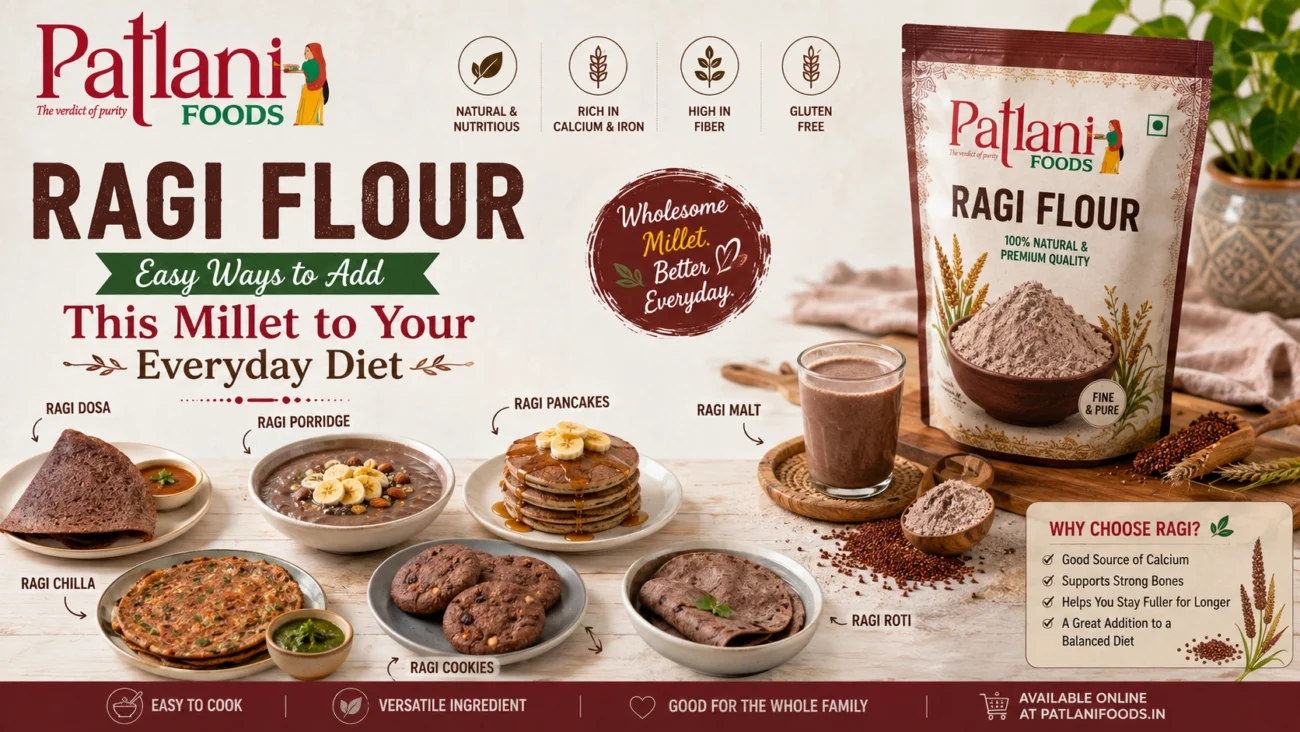
- Ragi Dosa Mix ragi flour with rice flour, some curd or buttermilk, and enough water to get a thin, pourable batter there’s no long fermentation involved here, which is what makes it a weekday friendly option. Toss in chopped onion, green chilli, and a bit of cumin, then spread it thin on a hot tawa. If your first few attempts come out thicker than a typical dosa, that’s fine thinner batter gets easier with practice.
- Ragi Porridge Probably the gentlest way to try ragi flour for breakfast. Whisk it into water or milk, cook on low heat while stirring so it doesn’t clump, then sweeten with jaggery or mashed banana. Some households skip the sweet route entirely and add salt with a little roasted cumin instead either way works.
- Ragi Pancakes A slightly newer addition to the ragi recipes list. Combine the flour with mashed banana, a spoon of curd, and a pinch of baking soda, then cook it like you would any regular pancake. Keep the batter on the thinner side at first ragi has a naturally dense texture, and a runnier batter helps offset that.
- Ragi Malt One of the older, more traditional uses cook the flour in water until it thickens a little, then loosen it with milk or buttermilk. Some drink it warm first thing in the morning; others prefer it cold in summer. Either way, it’s one of the oldest entry points into cooking with this millet.
Through the Day, Between Meals
- Ragi Chilla Think of it as a cousin to besan chilla mix ragi flour with gram flour, water, and whatever vegetables you have around (grated carrot, chopped capsicum, that sort of thing), then cook it on a tawa with a little oil. Works fine as an evening snack or something quick to pack for a tiffin.
- Ragi Cookies A small home baking project rather than an everyday necessity, but worth trying once. Mix ragi flour with a bit of regular flour, ghee, and jaggery or sugar, then bake in small batches. Good with evening tea, and a decent alternative to something store bought.
- Ragi Ladoo Roast the flour in ghee until it turns fragrant, mix in jaggery and a handful of nuts, then shape into small balls while still warm. These keep for several days, which makes them one of the more convenient options if you want something ready without cooking from scratch each time.
- Working Ragi Into Snacks You Already Make You don’t need a dedicated recipe for this one. A spoonful mixed into pakora batter, a bit added to muthiya dough, or worked into homemade crackers small additions like this are often the easiest way in for people who aren’t ready to commit to a whole new dish yet.
Lunch or Dinner
- Ragi Roti Common across South Indian and Maharashtrian kitchens. Knead the flour with hot water rather than cold ragi has no gluten, so the heat helps it bind add salt and, if you like, some chopped onion or coriander. It rolls out more easily between two sheets of plastic or a banana leaf than directly on a board. Serve with curry, chutney, or even plain curd.
- Mixing It Into Regular Atta If everything above still feels like too much to start with, this is the lowest-effort option there is: blend ragi flour into your usual wheat atta, maybe one part ragi to three or four parts wheat, and use it for the rotis you’re already making. Nothing about your meal changes except what’s in the flour bin.
Sweet or Savoury — It Doesn't Really Pick a Side
That’s arguably the most useful thing about this flour. Porridge, ladoo, cookies, and malt cover the sweet end. Dosa, roti, chilla, and muthiya style snacks cover the savoury one. Very few everyday ingredients move between both worlds this comfortably, which is a big reason easy ragi recipes have stayed part of regular Indian cooking rather than being reserved for occasional use.
Keeping Ragi Flour Fresh
Whole grain flours pick up moisture and go rancid faster than refined ones, and ragi is no exception. A few habits help:
- Keep it in an airtight container, out of direct sunlight
- Store it somewhere cool and dry
- Buy amounts you’ll actually use in a reasonable stretch, rather than stocking months’ worth at once
- In humid weather, the fridge isn’t a bad idea
Whether it comes from a local store or you’ve ordered ragi flour online, checking the packaging date before buying makes a noticeable difference to how it tastes later.
A Few Things That Help If You're Just Starting Out
- Blend it with a more familiar flour wheat or rice before trying it on its own
- Use hot or warm water for kneading; cold water makes the dough harder to work with
- Expect a different texture than wheat-based food, because it is different, and that’s fine
- Start with the more forgiving options porridge or malt before attempting roti or dosa
Mistakes Worth Avoiding
A handful of small errors tend to put people off unnecessarily:
- Kneading with cold water, which often leads to a roti that cracks while rolling
- Skipping the rest time for dosa batter, which affects how evenly it cooks
- Going all in with large quantities right away instead of easing in gradually
- Storing it carelessly, which is probably the single biggest reason people say it “doesn’t taste as good” it’s usually a storage issue, not the grain itself
Making It a Habit, Not a Project
The trick to keeping ragi flour for everyday diet use, long-term, is not treating it like a separate health regimen. A more realistic version looks like this:
- Swap in ragi roti or dosa once or twice a week, not every single day
- Keep a batch of cookies or ladoo around for when you want a quick snack
- Make porridge on the mornings you actually have a few extra minutes
- Blend it into your everyday atta so it rides along with meals you’re already making anyway
Small, repeatable habits tend to last far longer than an ambitious weeklong “millet challenge” that fizzles out by day four. And if grinding your own isn’t something you want to deal with, PatlaniFoods keeps a ready-to-use option available, so the flour itself is one less thing to think about.
Frequently Asked Questions
Yes it's commonly rotated with wheat, rice, or other flours rather than eaten on its own, which makes regular use fairly easy to manage.
Yes. In the morning it usually shows up as porridge, dosa, or pancakes; by dinner, roti is the more common form.
Not much. It mixes directly into water, milk, or other flours. For roti specifically, hot water during kneading makes the dough far easier to handle.
Yes porridge, malt, or simply blending it into your regular atta are the gentlest entry points before moving on to dosa or roti.
Most grocery stores carry it, and it's also available as ragi flour online through brands like PatlaniFoods if you'd rather not hunt for it in person.
