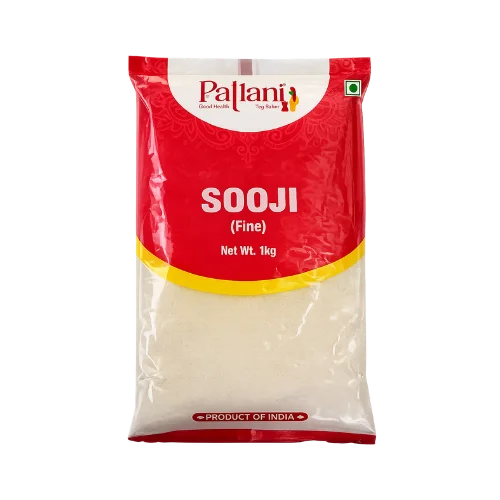
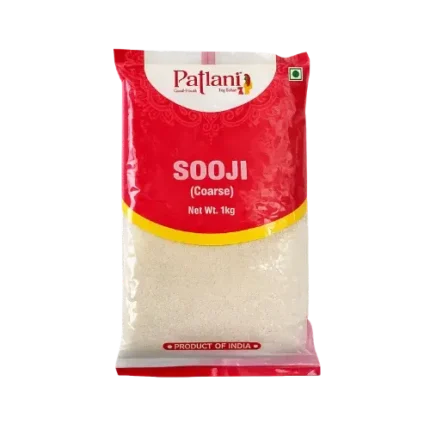
There’s nothing complicated about sooji, but getting the quality right takes more effort than people assume. Patlani Foods starts with wheat that’s cleaned thoroughly before it even reaches the mill. Dust, husk, stray particles, all of that gets removed early so the final product isn’t carrying anything it shouldn’t.
What you actually notice first, though, is the texture. It’s fine and consistent, grain to grain, which matters more than people realise until they cook with a bad batch. Uneven rava gives you patchy halwa or a lumpy upma, and there’s no fixing that once it’s on the stove. This one doesn’t have that problem.
The smell is another giveaway of freshness. Freshly milled semolina has a light, slightly nutty aroma, and that’s what you get here, not a flat or stale smell that older stock sometimes has sitting in warehouses too long. Taste-wise it’s mild, which is actually a good thing since it doesn’t fight with whatever spices or sweeteners you’re adding.
Cooking with it is straightforward. Because it’s fine, it absorbs liquid quickly and evenly, so upma or sheera comes together faster than with coarser rava. It also works nicely in batters, dhokla, cheela, rava dosa, without needing extra effort to get a smooth consistency.
On the packaging side, everything is sealed properly to keep moisture and pests out, which is honestly one of the biggest reasons sooji goes bad early at home. The pack sizes are practical too, whether you need a small one for a household kitchen or something bigger for a restaurant or retail setup.
People keep coming back to this product mainly because it’s predictable. Same texture, same taste, same result every time they cook with it. For anyone running a kitchen where consistency actually matters, that’s not a small thing.
Best Uses
- Regular or vegetable upma
- Sooji halwa, sheera, and other sweets
- Rava dosa and rava idli batter
- Dhokla and cheela mixes
- Rava ladoo
- Thickening for certain gravies
- Rava cutlets or tikkis
Storage Instructions
Keep it in a cool, dry spot, away from direct sunlight. After opening, move it into an airtight container don’t leave it in the original pack once it’s cut open. Always use a dry spoon; moisture is what causes clumping or early spoilage. Stored properly, it stays good for a good few months.
Why Choose Patlani Foods
- Wheat is checked and cleaned properly before milling, not just at the end
- No unnecessary additives, kept close to its natural form
- Packaging is built to protect freshness, not just look good on a shelf
- Consistent enough that households and small businesses both rely on it
- Comes in multiple pack sizes depending on what you actually need
- A brand that focuses on staples people use daily, not one-off products
Frequently Asked Questions
- Is sooji the same thing as rava?
Yes. Sooji and rava are basically the same product, just different names used in different parts of India. Both refer to semolina made from wheat. - Can I use this fine sooji for dosa batter?
Yes, it works well for that. The fine texture blends smoothly, so you get a batter without lumps, which spreads easily on the tawa. - What’s the actual difference between fine and coarse sooji?
Fine sooji has smaller, tighter granules, so it suits dishes like halwa or dhokla where you want a smooth texture. Coarse sooji is more common for upma, where a bit of bite is preferred. - Can I order this suji online in bulk?
Yes. Patlani Foods offers different pack sizes, so whether you’re buying for home or ordering in bulk for a restaurant or shop, you can buy Sooji online according to what you need. - Does this semolina have any preservatives in it?
No, there’s nothing added. It’s kept in its natural form, and freshness is maintained purely through proper cleaning and sealed packaging.






Reviews
There are no reviews yet.