



Blog
Why Bhavnagri Ganthiya Has a Special Place in Gujarati Snacking Culture

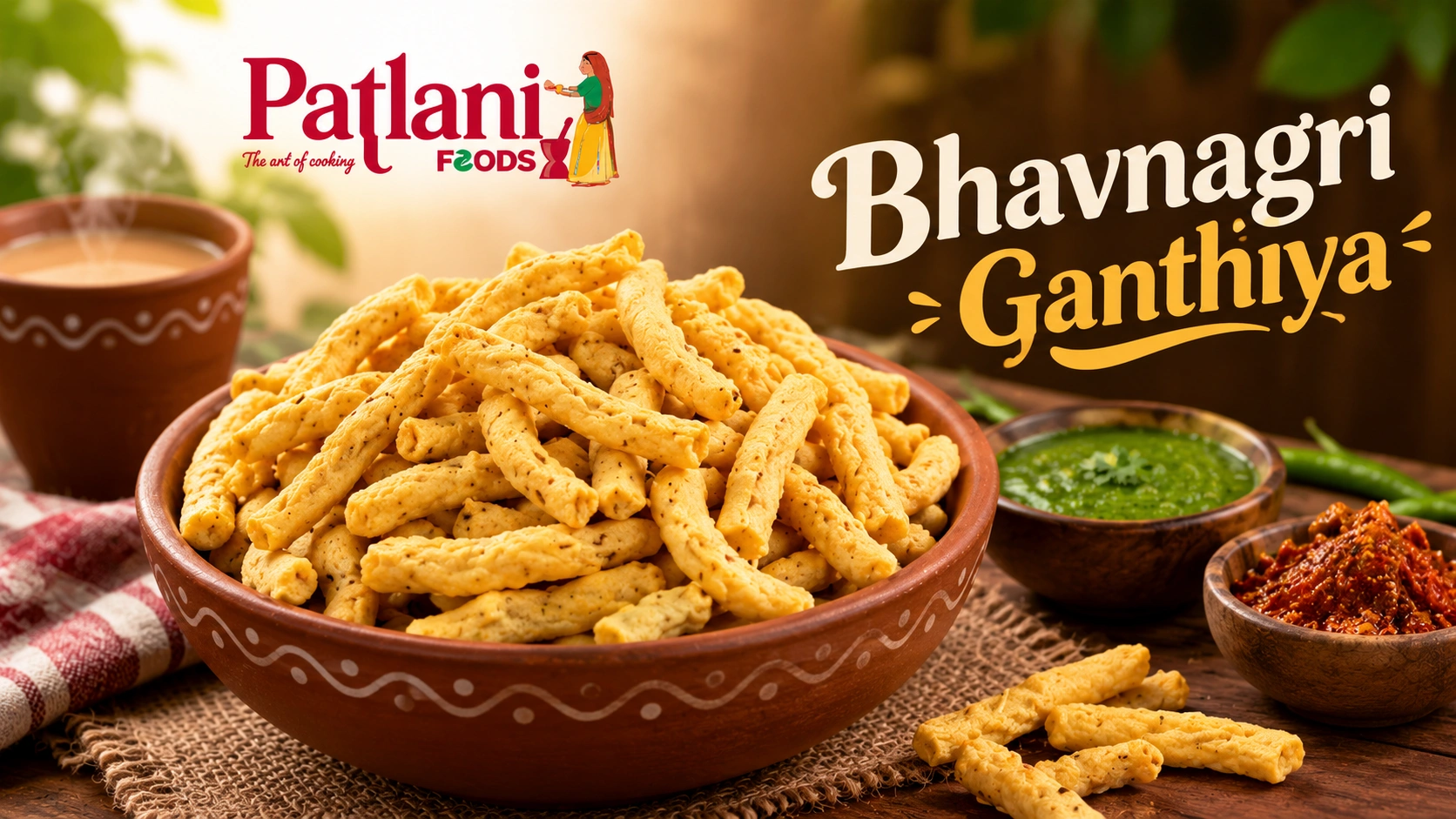
Ask anyone from a Gujarati household what “snack time” actually means, and you’ll rarely get a simple answer. It’s the four o’clock tea. It’s the neighbour who drops by without warning. It’s the farsan plate that somehow always appears when people gather, as if by habit rather than planning. Somewhere in the middle of all that sits Bhavnagri Ganthiya soft yet firm, mildly spiced, and familiar enough that most Gujaratis could pick it out of a snack mix blindfolded.
So what is it about this one snack, out of dozens of Gujarati options, that’s earned it such a lasting spot? That’s really what this piece sets out to answer not just what it is, but why it hasn’t faded the way so many regional foods eventually do.
What Is Bhavnagri Ganthiya?
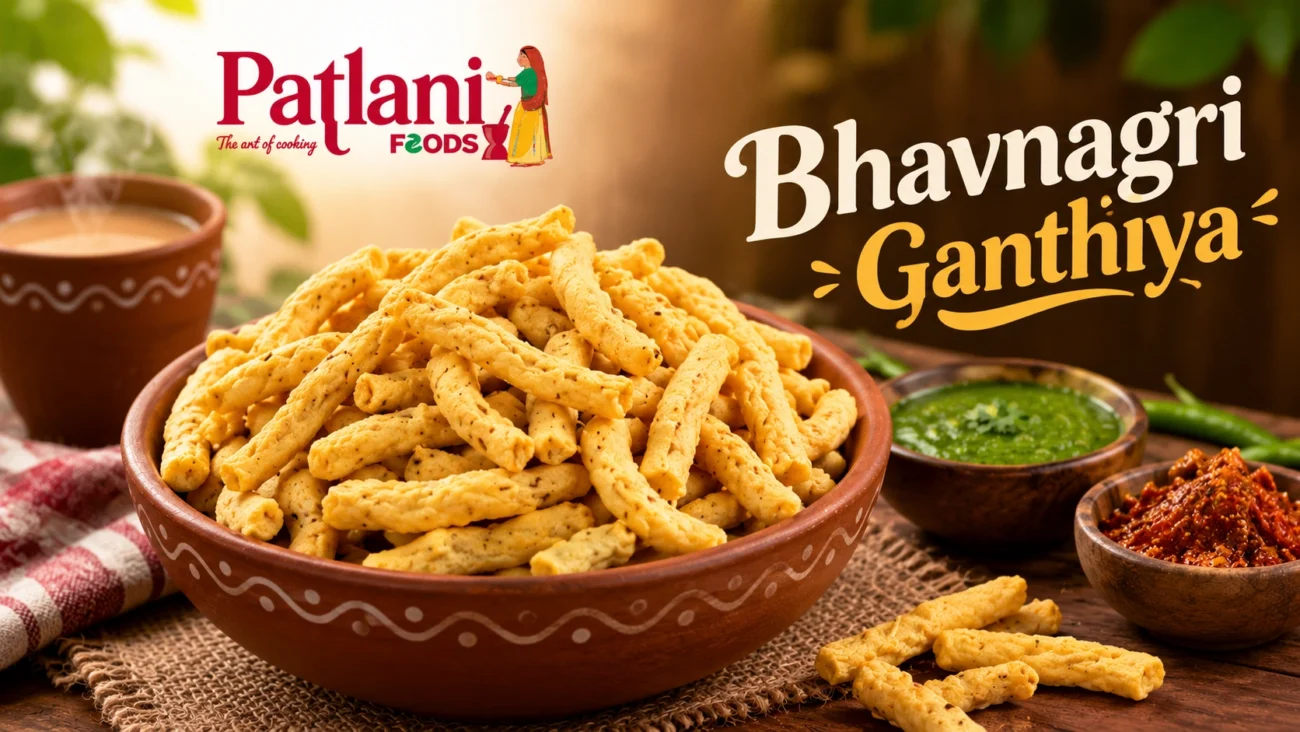
At its simplest, Bhavnagri Ganthiya is a fried gram-flour snack tied to Bhavnagar, a city in Gujarat with a long standing reputation for namkeen and farsan. Like other Ganthiya varieties, the besan dough gets pressed into thick strands and deep fried. Nothing unusual there. What sets it apart is harder to pin down in one line a certain balance of thickness, softness, and seasoning that makes it feel distinct from the thinner, crunchier snacks people usually lump it together with, like sev.
Most fried gram flour snacks chase maximum crunch. This one doesn’t, really. It leans softer, milder the kind of flavour that doesn’t announce itself the moment you bite in. There’s a faint tang to the seasoning too, which, as it turns out, has a lot to do with why it pairs so naturally with other foods. More on that shortly.
The Connection Between Ganthiya and Gujarati Food Culture
Here’s the thing about snacking in Gujarat: it was never really optional. Farsan and namkeen aren’t treated as extras they’re part of the daily rhythm. Morning tea comes with something savoury. So does the afternoon lull. Evenings, when families sit together, rarely go by without a small plate of something fried and salty on the table.
This is exactly where a snack like Bhavnagri Ganthiya finds its footing. Good taste alone doesn’t make a food part of a culture. What does is repetition showing up again and again, quietly, across generations, until nobody really questions why it’s there. Grandmothers know which shop makes the best batch. Families keep a tin of it in the kitchen without thinking twice. Somewhere along the way, it stops being “a snack” and becomes just… part of the house.
What Makes This Ganthiya Different?
A few things, taken together, give it a character of its own:
- Texture – softer and thicker than sev, though still with a light outer crunch
- Thickness – pressed heavier than most sev varieties, so each bite feels more substantial
- Seasoning – restrained rather than heavily spiced, which keeps it easy on most palates
- Preparation style – a wider die changes both the texture and how long it needs to fry
- Regional identity – rooted in Bhavnagar’s own namkeen making history
- How it’s eaten – usually on its own or with chutney, not as a topping the way sev often is
Put simply, it’s the mild, rounded flavour paired with that softer bite that keeps it from blending into the crunchier, more heavily spiced end of the Gujarati snack shelf.
Bhavnagri Ganthiya vs Other Gujarati Snacks
Gujarat doesn’t exactly have a shortage of fried snacks. Here’s how this one stacks up against a few familiar names:
|
Snack |
Texture |
Flavour Profile |
Typical Use |
|---|---|---|---|
|
Bhavnagri Ganthiya |
Soft, thick, lightly crunchy |
Mild, subtly tangy |
Breakfast, tea time, farsan plates |
|
Fafda |
Flat, crisp, flaky |
Mild, slightly salty |
Breakfast with jalebi and chutney |
|
Nylon Sev |
Very thin, delicate |
Light, subtly salty |
Chaat and dhokla topping |
|
Ratlami Sev |
Thick, coarse, crunchy |
Peppery, spiced |
Standalone snack, poha topping |
|
Plain Sev |
Medium, crisp |
Mild, salty |
Everyday namkeen mixes |
|
Papdi |
Flat, crunchy discs |
Mild, savoury |
Chaat, farsan platters |
Look closely and a pattern emerges: nearly all of these share besan as a base, yet each one is built for a different purpose and a different texture. None is “better” in any real sense they just aren’t trying to do the same job.
Why Bhavnagri Ganthiya Is So Popular With Tea
Ask a Gujarati household why this pairing works so well, and most people will land on the same word: balance. The Ganthiya’s mild, faintly salty flavour doesn’t fight with tea the way a heavily spiced snack sometimes can. Instead it sits alongside the chai, giving your palate something to move between a sip, then a bite, then back again.
That same principle carries over when it’s paired with chutney, pickle, or papaya sambharo. The sharpness of a green chutney, or the tang of a pickle, plays off the milder, softer base underneath it. Small contrast, but it works.
How This Snack Is Enjoyed in Gujarati Homes
It doesn’t really belong to one meal. It shows up wherever there’s a reason to snack:
- At breakfast – often next to fafda and jalebi
- During evening tea – a light, low effort accompaniment
- At family gatherings – as part of a shared farsan platter
- During festivals – when the spread tends to get more elaborate anyway
- When guests turn up – a quick, reliable offering
- On journeys – it travels and stores better than softer snacks do
That flexibility explains a lot. Ganthiya varieties in general, and this one in particular, haven’t stayed relevant by accident they’ve simply never given anyone a reason to stop reaching for them.
The Ingredients Behind Its Distinctive Taste
The ingredient list is short, almost deceptively so. Besan forms the base, mixed with a little hot oil for crispness, water to bind everything, and a light seasoning of salt and a few spices. Some cooks work in a touch of ajwain, others add a pinch of soda for texture, recipes shift slightly from one kitchen, or one region, to the next.
What actually matters more than any single ingredient is proportion. Enough besan to hold the dough together, but not so much seasoning that it drowns out the mild flavour this snack is meant to have.
Traditional Preparation and Texture
The process follows a pattern familiar across Gujarati farsan-making, though the specifics vary. Besan gets kneaded into a soft dough with oil and water, rested for a bit, then pressed through a die that’s noticeably wider and thicker than what’s used for sev. That’s really where the thickness comes from.
From there, it’s fried in batches at a moderate heat, so the centre cooks through without the outside turning too hard. Getting that right a little crunch outside, softness underneath is generally what separates a good batch from an average one.
Bhavnagri Ganthiya in Modern Gujarati Snacking
Traditional snacks don’t always translate easily into busy modern routines, but this one has managed reasonably well. Packaged namkeen means people don’t have to make a fresh batch every time they want it, and online delivery has made it possible for anyone outside Gujarat to still get their hands on the flavours they grew up with.
This is where brands like Patlani Foods fit in bringing familiar Gujarati and Indian snack flavours into convenient, packaged formats for people who want that connection to home without making everything from scratch. It sounds like a small thing, but it matters for keeping food traditions alive. A snack that stays easy to find stays part of daily life. One that doesn’t tends to become a memory instead.
For a lot of buyers, brands such as Patlani Foods simply make it easier to keep traditional Gujarati snacks like this one around whether that’s for an ordinary Tuesday tea or a bigger festive spread.
Frequently Asked Questions
It's a fried gram-flour snack associated with Bhavnagar, Gujarat softer and thicker than sev, with a mild, faintly tangy flavour rather than a strong spice kick.
Mostly because it fits into everyday routines without any effort for breakfast, tea time, family get togethers. Its mild flavour also pairs easily with tea, chutney, and pickle, which keeps it in regular rotation rather than being an occasional treat.
Recipes vary by region, but this style tends to be pressed thicker and seasoned more gently than some other Ganthiya varieties.
Yes, quite commonly. Many Gujarati households pair it with fafda, jalebi, or simply a cup of tea in the morning.
Sev is thinner and crisper overall. This one is pressed thicker, has a softer bite, and carries a noticeably milder flavour.
