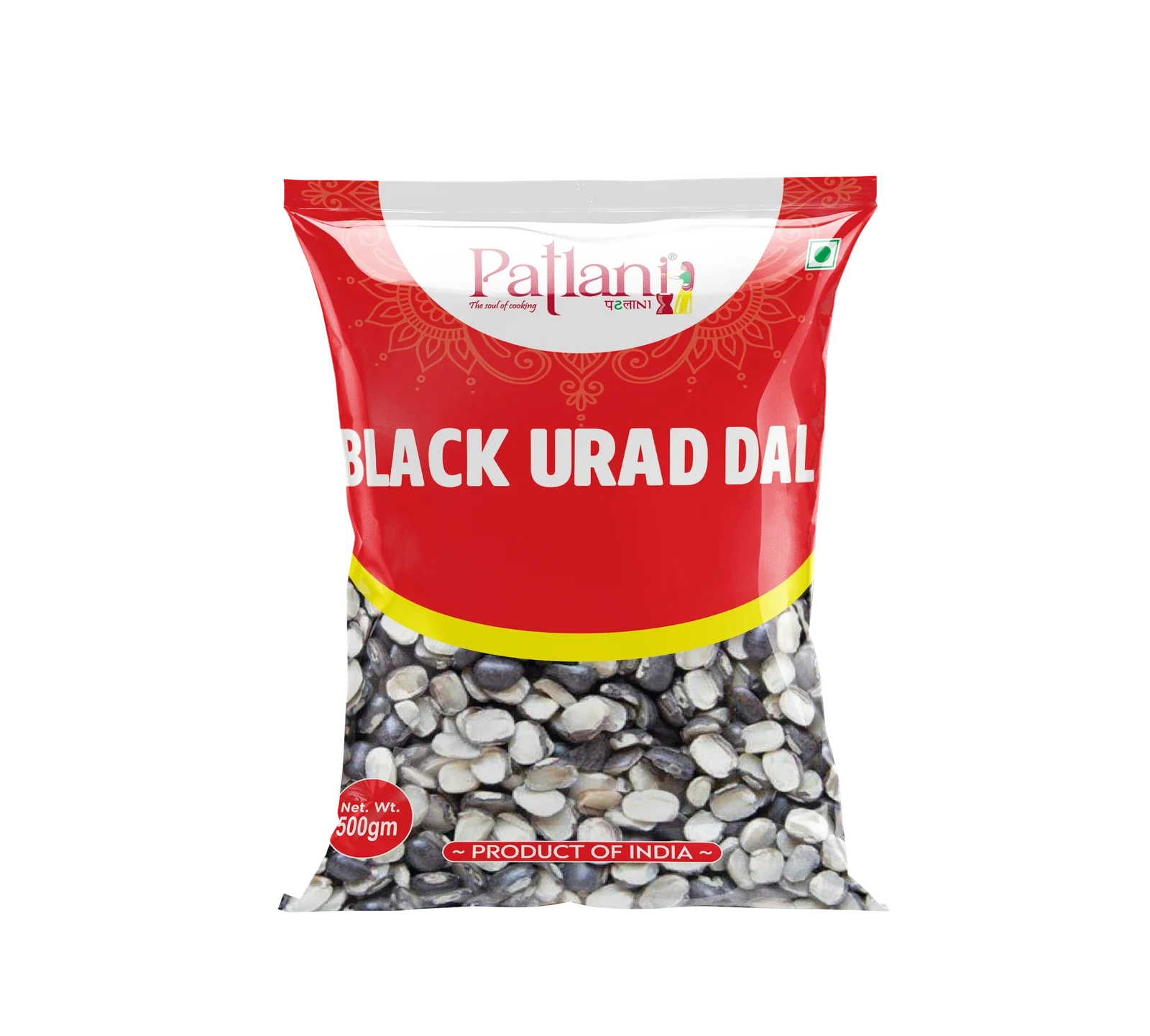
Black gram dal, or whole urad with skin, is what most people mean when talking about the dal that goes into a proper dal makhani. Patlani Foods sources this cleaned thoroughly before packing, stones and husk and shrivelled grains sorted out, avoiding the stuff cheaper, loosely sold urad sometimes still carries through.
Appearance says a fair bit about quality here. The grains are fairly even in size, with that natural dark, almost black skin, minimal cracked or discoloured pieces mixed in. Poorly sorted sabut urad dal tends to look inconsistent, some grains smaller, some already split, which throws off cooking time across the whole batch.
Smell's mild, earthy, the kind of smell fresh legumes generally have, nothing musty about it, which usually means the grain hasn't been sitting around too long before getting packed. Taste once cooked is rich, slightly nutty, that deep flavour people specifically want in a slow-cooked dal makhani or urad-based curry.
Cooking performance really comes down to grain quality, and properly sorted, whole black gram urad dal actually makes a difference here. Needs soaking for a good few hours, sometimes overnight, before it cooks evenly, softening into that thick, creamy texture without a large number of grains staying stubbornly hard. For anyone specifically looking for chilka urad, this is exactly that, skin on, whole grain, not split or skinned.
Freshness comes down to packaging honestly. Sealed properly, keeps out moisture and pests, both fairly common issues with pulses left sitting loose for too long. Pack sizes work for regular home cooking, bigger ones available if you're a restaurant or buying wholesale.
People generally keep buying this black urad dal once they've cooked with it a few times, mostly because cooking time and texture stay reliable pack to pack, something that matters a lot for a dish like dal makhani where slow cooking is the whole point.
Best Uses
- Dal makhani, slow-cooked with butter and cream
- Urad dal sabzi with basic tempering
- Certain traditional snacks using whole urad
- Soaked and ground for regional batter recipes
- Mixed dal preparations combining urad with other lentils
- Sprouted urad for specific traditional dishes
Storage Instructions
Keep it somewhere cool and dry, away from sunlight and damp air. Once opened, shift it into an airtight container rather than leaving it in the pack. Check now and then for pests if it's been stored a while. Do this, and it stays usable for a good few months.
Why Choose Patlani Foods
Grain gets cleaned and sorted before it's packed, not after. Nothing artificial added, kept close to its natural, whole form. Packaging's built to actually hold freshness, not just look decent on a shelf. Grain size and colour stay consistent, batch to batch, which matters if you're making dal makhani regularly and want predictable cooking time. If you need reliable whole black urad dal for slow-cooked dishes, this tends to work out well. Comes in a few pack sizes too, whether it's for home or something bigger.






Reviews
There are no reviews yet.